
Why I Chose Black & Grey Realism as My Signature Style
Introduction — Where My Style Truly Began
There are many reasons an artist chooses a style.
Some follow trends.
Some follow mentors.
Some follow the market.
I didn’t choose black & grey realism that way.
For me, the path started long before tattooing — long before skin, machines, or needles.
It began with a pencil.
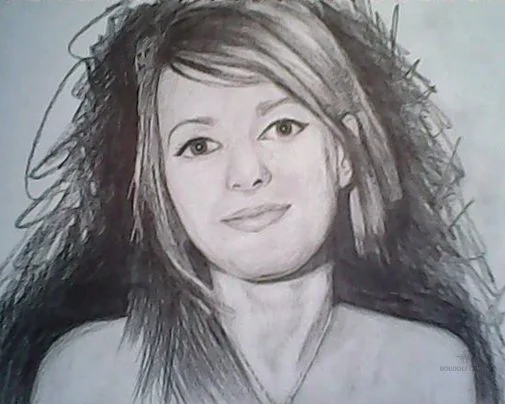
I was seventeen when drawing became an obsession. Not colour. Not paint.
Just graphite — pure, silent, honest graphite.
Graphite taught me how to sculpt form with light and shadow and how to tell a story without relying on colour to carry the emotion.
It taught me patience, observation, and discipline.
And without realising it back then…
it was quietly preparing me for the artist I would become.
The Beginning — A World Built in Shades
For years, black and white was all I knew.
I carried sketchbooks everywhere, filling them with portraits, landscapes, ideas — anything that allowed me to explore the depth of art.
I didn’t come from an artistic family.
There was no blueprint.
No teacher guiding the way.
So I assumed that to be “good,” I simply had to copy the world as realistically as possible.
Detail became my measure of progress.
Light and shadow became my language.
Realism became my anchor.
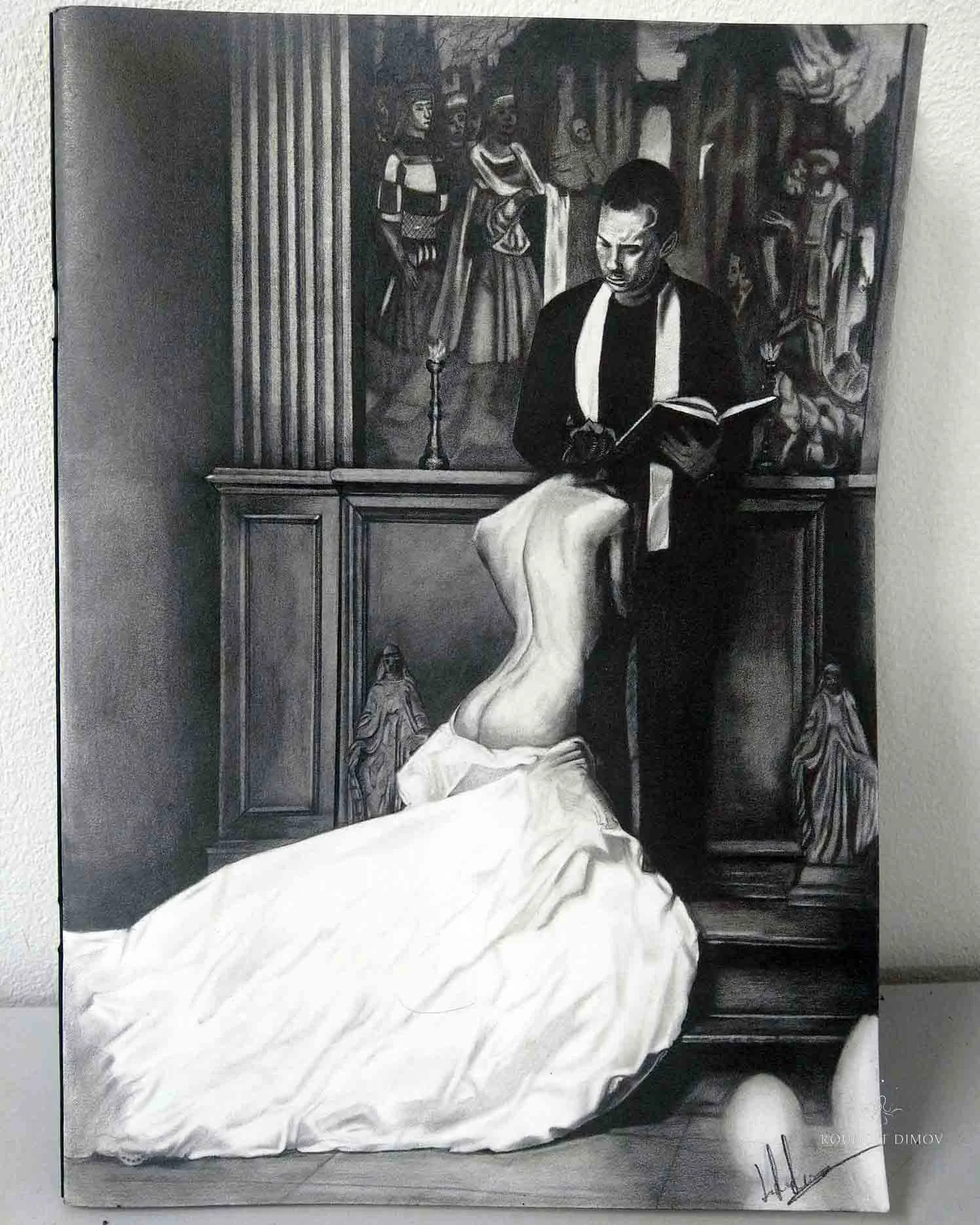
Even when I reached university, nothing changed at first.
My first-year exhibition was still graphite — page after page of monochromatic studies.
Drawings that looked like memories more than images.
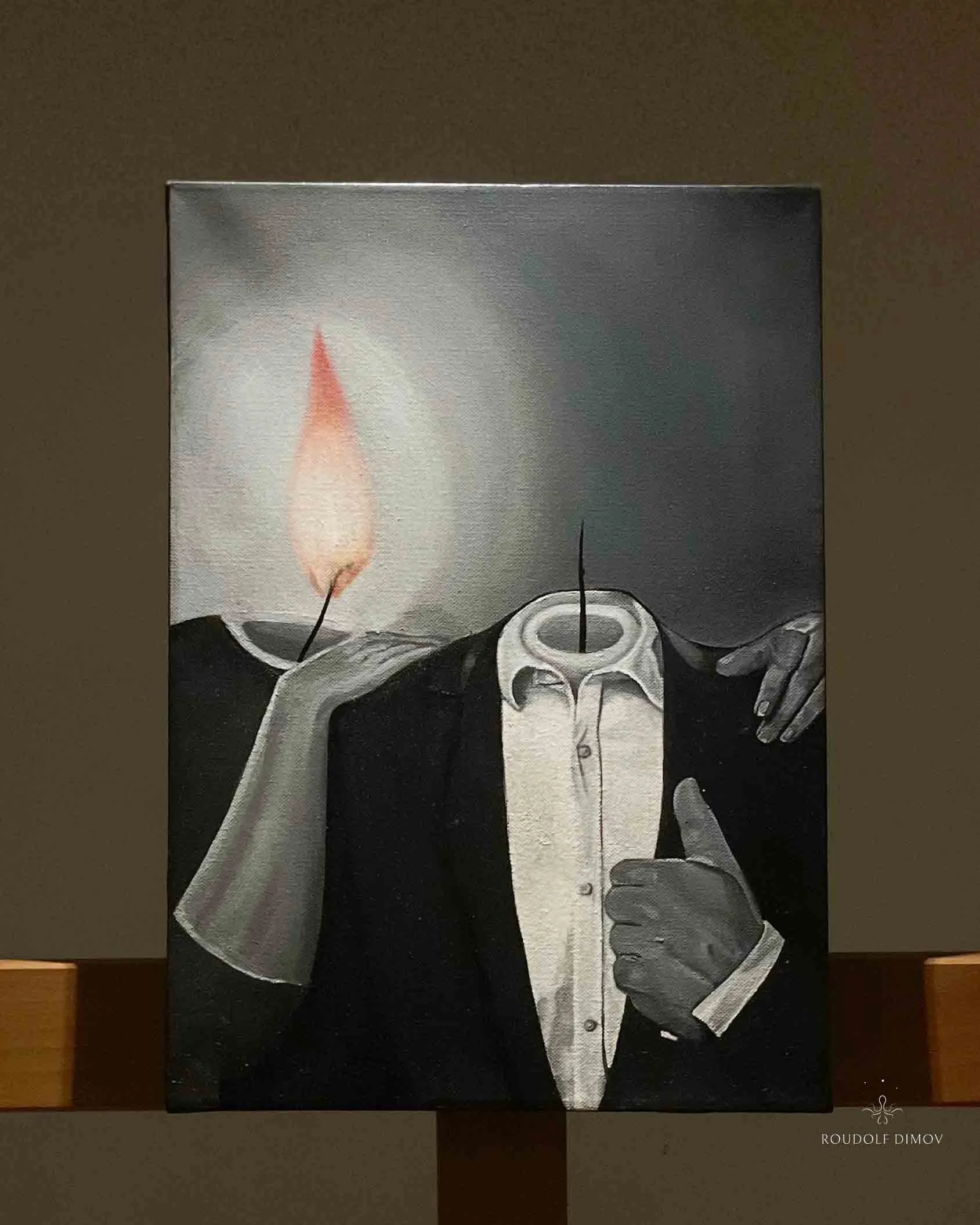
And even when I eventually picked up oil paint, I didn’t run to colour.
I stayed in the comfort of limited palettes — black, white, and the quiet value shifts between them.
Colour felt like a world I wasn’t ready to open yet.
Graphite wasn’t just a medium.
It was a mindset.
A way of seeing.
And that mindset followed me into tattooing.
From Graphite to Skin — A Natural Transition
When I first touched a tattoo machine, I approached skin the same way I approached a piece of paper:
• Where does the light fall?
• Where does the form break?
• What does the shadow mean?
• How does emotion sit in the structure of the face?
Black & grey realism felt like an extension of everything I had already been doing for years.
The medium was different.
The philosophy remained the same.
A portrait is still a portrait.
Values still tell the story.
Edges still control the mood.
Light still sculpts emotion.
Tattooing simply became a new surface for a language I already spoke fluently.
The Crossroads — Why I Stayed Black & Grey
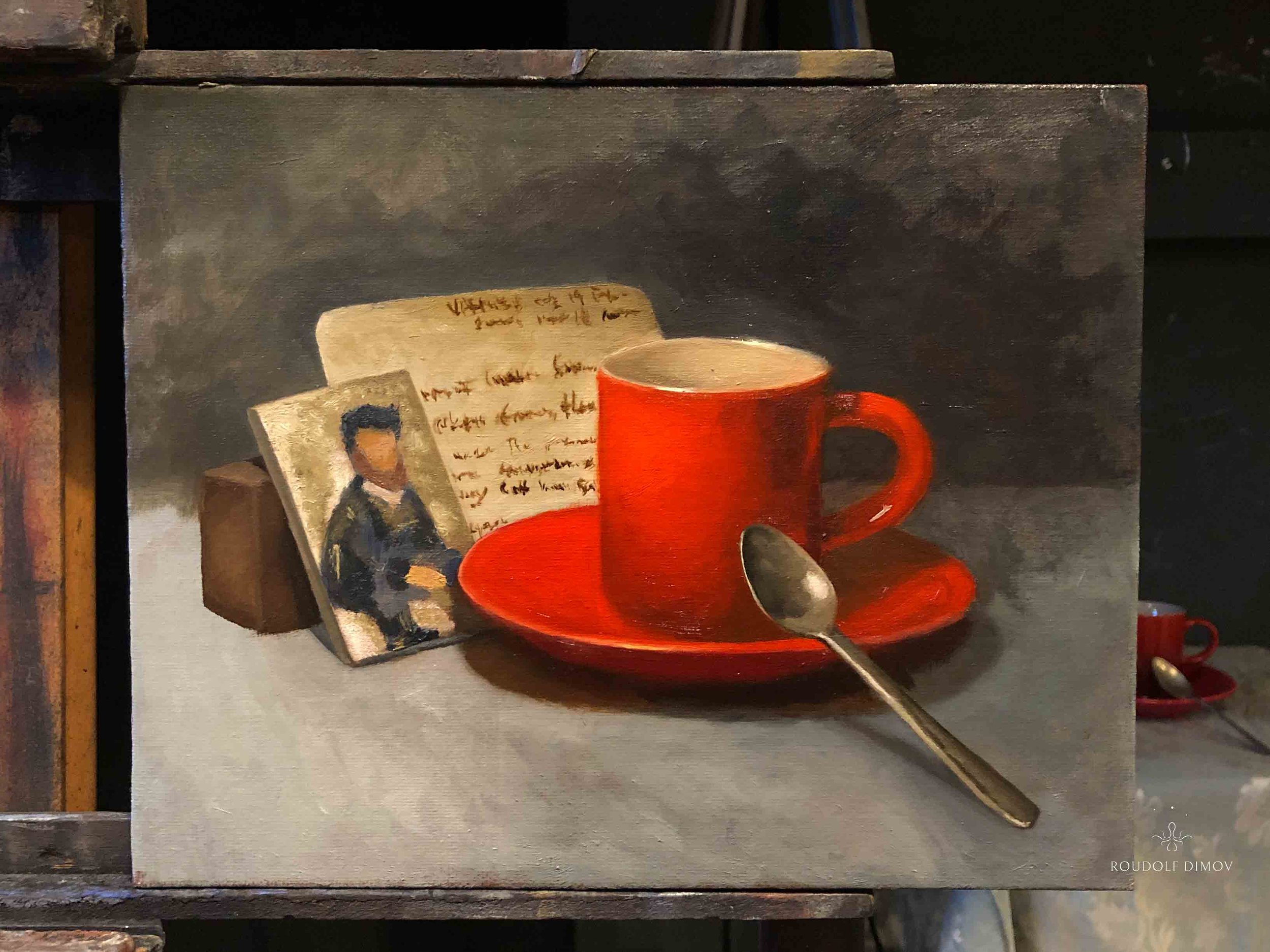
As my painting practice grew, I started experimenting with colour — warm palettes, cool palettes, expressive combinations.
Eventually, I became comfortable creating full-colour paintings.
As my painting practice grew, I started experimenting with colour — warm palettes, cool palettes, expressive combinations.
Eventually, I became comfortable creating full-colour paintings.
And naturally, the question appeared:
“Should I switch to colour tattoos too?”
For a while, I considered it seriously.
Colour offers huge creative freedom — mood, temperature, emotion, impact.
But eventually, I realised something important:
My tattoo work and my painting don’t have to speak the same language.
So I made a decision that shaped my artistic identity:
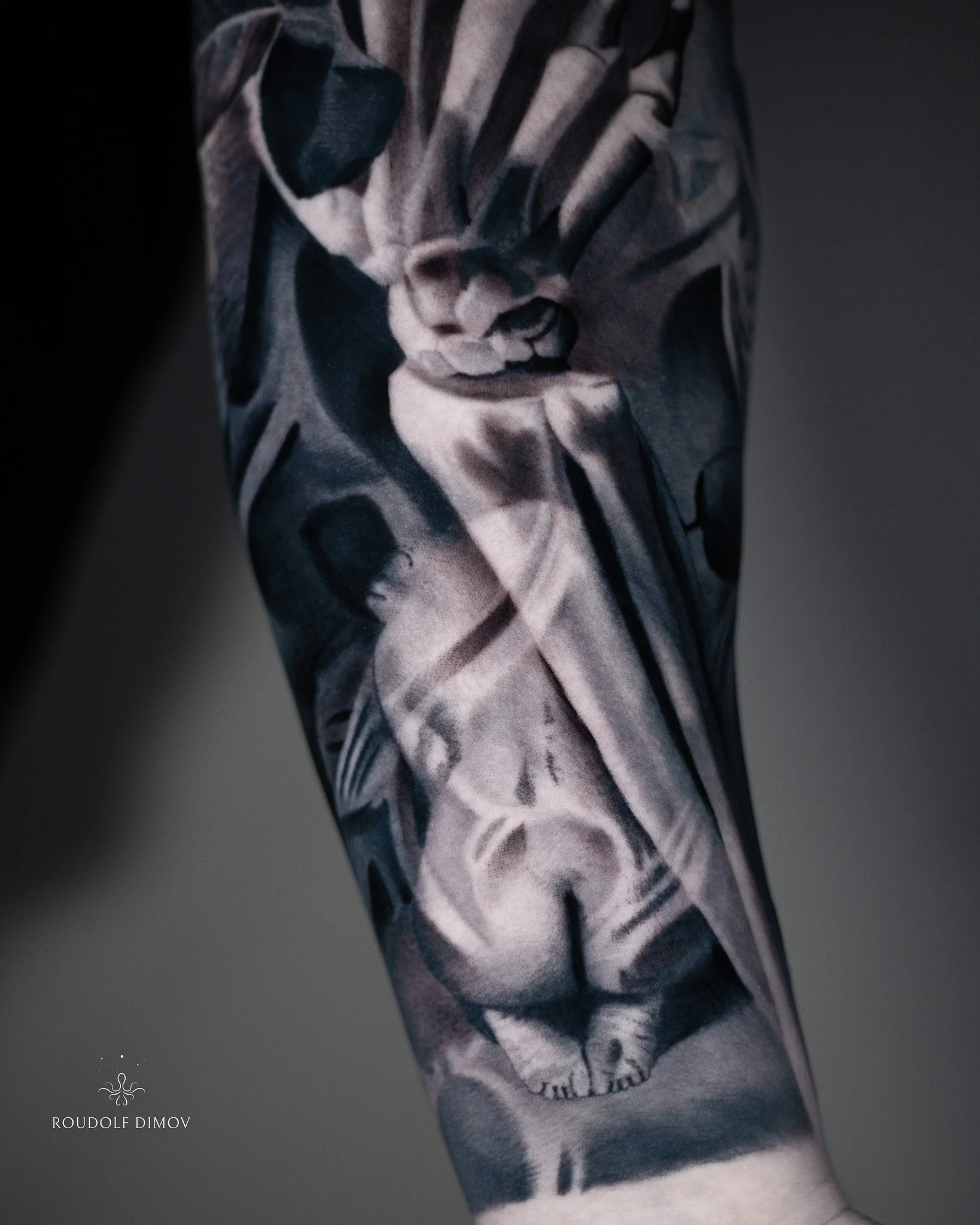
Tattooing will remain black & grey — focused, precise, timeless.
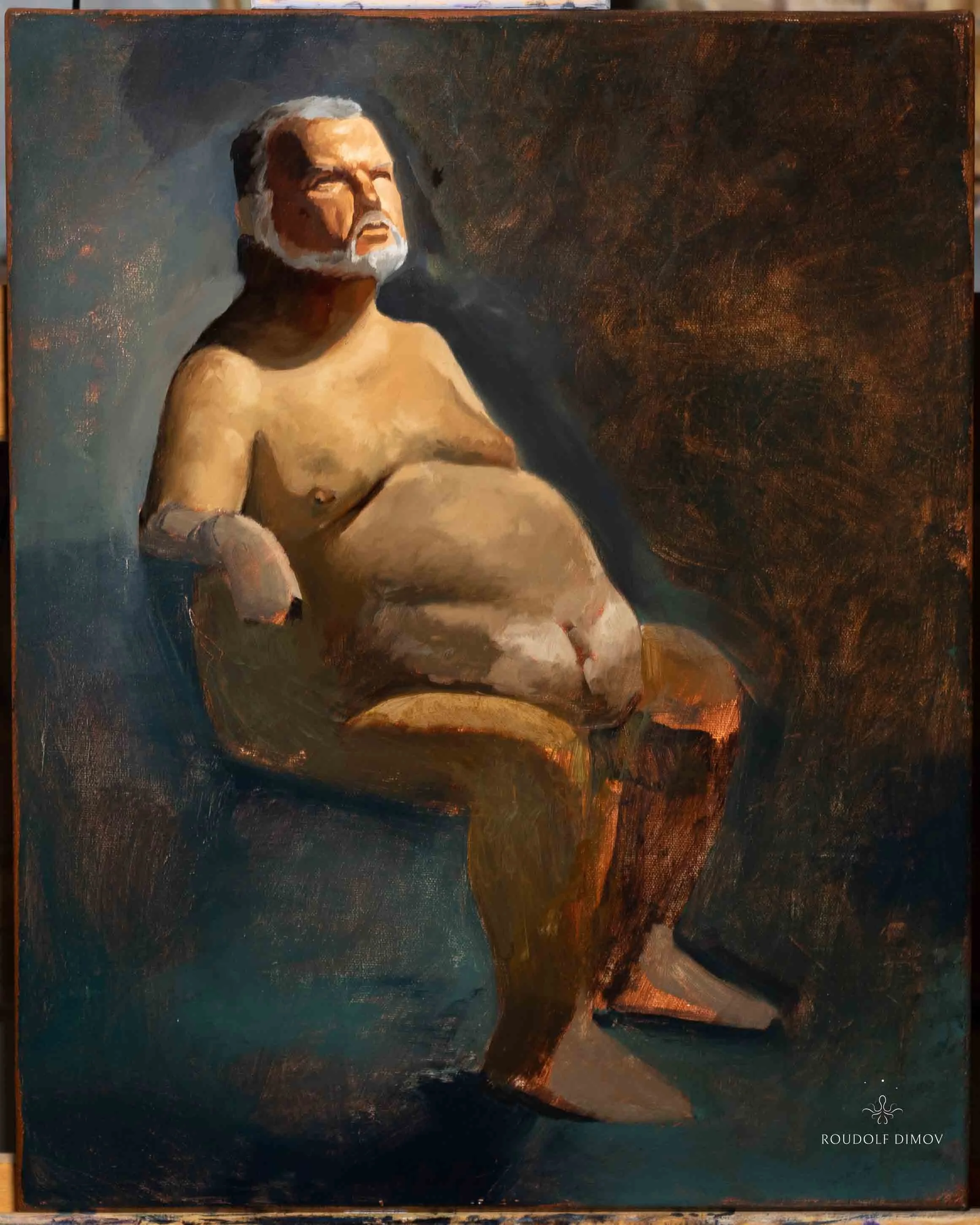
Painting will remain full colour — expressive, experimental, emotional.
Keeping them separate allows each world to grow on its own without diluting the other.
Tattooing became the craft I refine relentlessly.
Painting became the place where I explore freely.
Both coexist — but they don’t compete.
Black & Grey Realism — The Philosophy Behind It
People often assume colour is harder than black & grey.
But the truth is simpler:
Black & grey exposes everything.
With no colour to “save” the piece, the entire tattoo relies on one thing — the artist’s skill.
You need:
• clean transitions
• believable highlights
• purposeful shadows
• strong structure
• thoughtful composition
• emotional clarity
• technical precision
Every weakness is visible.
Every choice matters.
Black & grey leaves no place to hide — and that honesty is exactly what I love about it.
It creates a cinematic mood, like an old film where every frame matters.
It feels timeless — not tied to a trend, but to a deeper artistic foundation.
And more importantly, it aligns perfectly with how I think and design:
Intentional.
Structured.
Symbolic.
Emotional.
Storytelling — Where My Style Found Its Voice
My interest in storytelling didn’t come from tattooing.
It started in university, during the years when copying reference images stopped feeling enough.
I wanted meaning.
I wanted narrative.
I wanted artwork that made people feel something — even if they couldn’t explain why.
Growing up in Greece, mythology was always part of my world.
Stories of gods, heroes, fate, and sacrifice were everywhere — in museums, in books, in conversations.
So when I began tattooing, mythology became the first theme that truly resonated with me.
Not because it was popular — but because it felt personal.
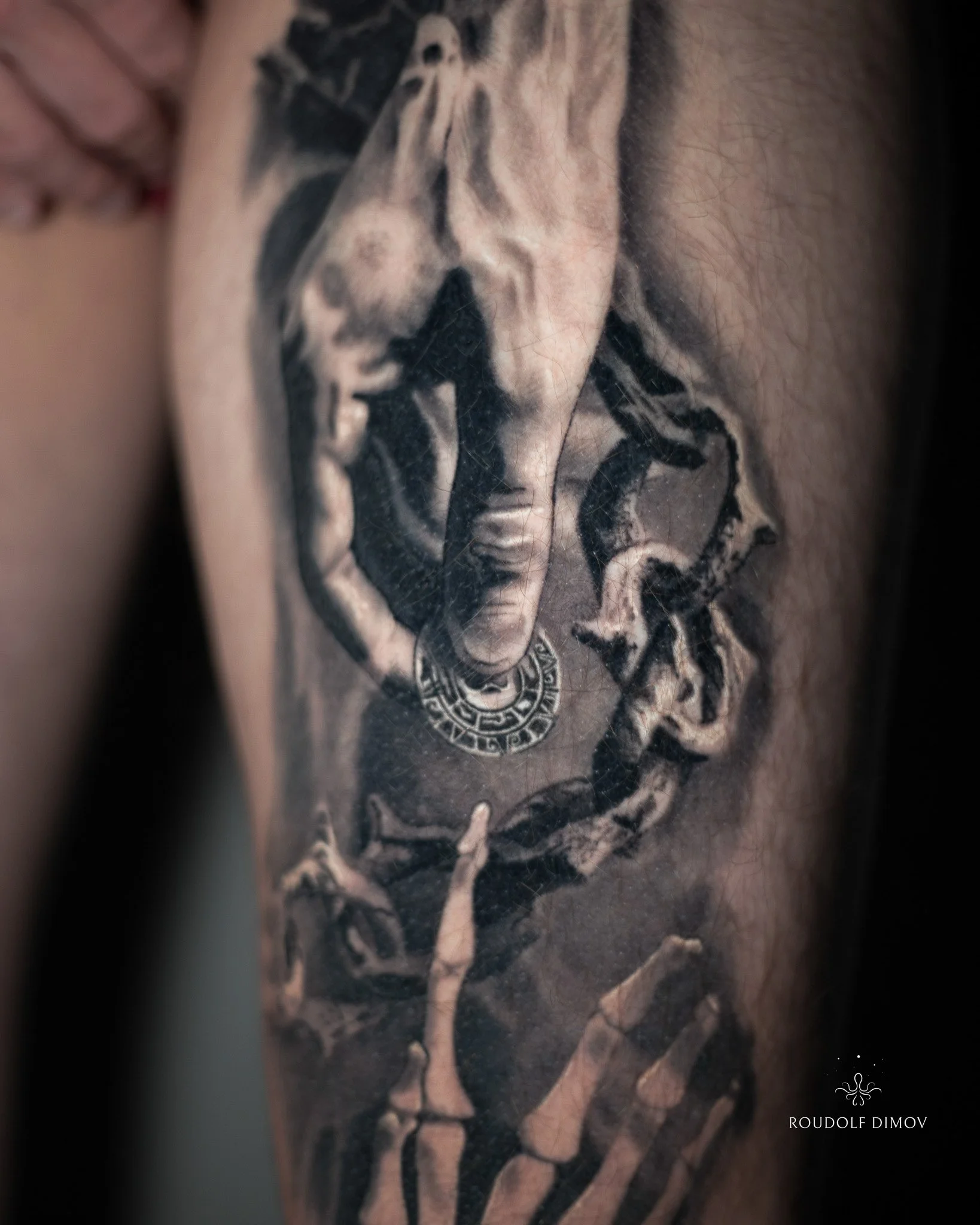
Mythology allowed me to merge everything I loved:
• graphite foundations
• black & grey technique
• symbolic storytelling
• emotion-driven realism
It gave me a way to build tattoos that weren’t just images, but narratives — full sleeves that feel like sagas, scenes, or chapters of a larger myth.
And over time, that became my signature.
The Future of My Style — Evolving Without Colour
Black & grey might feel limiting to some artists.
To me, it feels like an endless space to explore.
When you remove colour, every other element becomes more important:
• storytelling
• composition
• light direction
• emotional tone
• symbolism
• rhythm on the skin
• atmosphere
• texture
I study myths from different cultures, explore symbolism, experiment with surreal composition, and search for new ways to communicate narratives through light alone.
I’m drawn to that discipline — the challenge of creating something powerful using only values.
More than a decade later, black & grey realism still feels right because it allows me to grow without losing myself.
It brings together every version of who I’ve been:
A kid with a pencil.
A student searching for meaning.
An artist shaping stories in skin.
And that’s why it remains my signature style.
Ready to Start Your Tattoo Journey?
If you’re drawn to black & grey realism — or want a tattoo built around your story, symbolism, or mythology — I’d love to create something meaningful with you.
👉 Large Projects:
www.roudolfdimovart.com/large-projects
👉 Book a Consultation:
https://www.roudolfdimovart.com/booking
📍 London
✉️ info@roudolfdimovart.com
“Bring your story — I’ll bring it to life.”
FAQs — Black & Grey Realism
Why do you prefer black & grey over colour?
Because it feels honest to my artistic roots. Black & grey relies on value, structure, and technique — the foundation of how I learned to create art.
Does black & grey age better than colour?
Generally, yes. It tends to stay readable for longer and softens gracefully with time.
Can black & grey still be expressive?
Absolutely. Light, shadow, atmosphere, and symbolism create emotional depth without needing colour.
Is mythology a big part of your work?
Yes — Greek, Norse, and symbolic themes naturally fit my style and my storytelling approach.
Do you tattoo in colour at all?
Occasionally, but black & grey realism is my core style and artistic identity.
🔎 Explore More FAQs:
https://www.roudolfdimovart.com/faq