
Tattoos That Shaped My Career: A Look Back at 2022
Every artist has pieces that leave a mark—not just on skin, but on the artist themselves.
For me, certain tattoos define a moment in time. They mark shifts in confidence, technique, identity, or direction. They remind me where I was, how much I pushed myself, and what I learned along the way.
This is the first entry in a series where I revisit the tattoos that shaped my career—year by year.
We start with 2022: a transitional year, full of risk, experimentation, and moments where things began to "click" for me as an artist.
Below are five tattoos from that year that still hold a strong place in my memory—not because they were perfect, but because they taught me something essential.
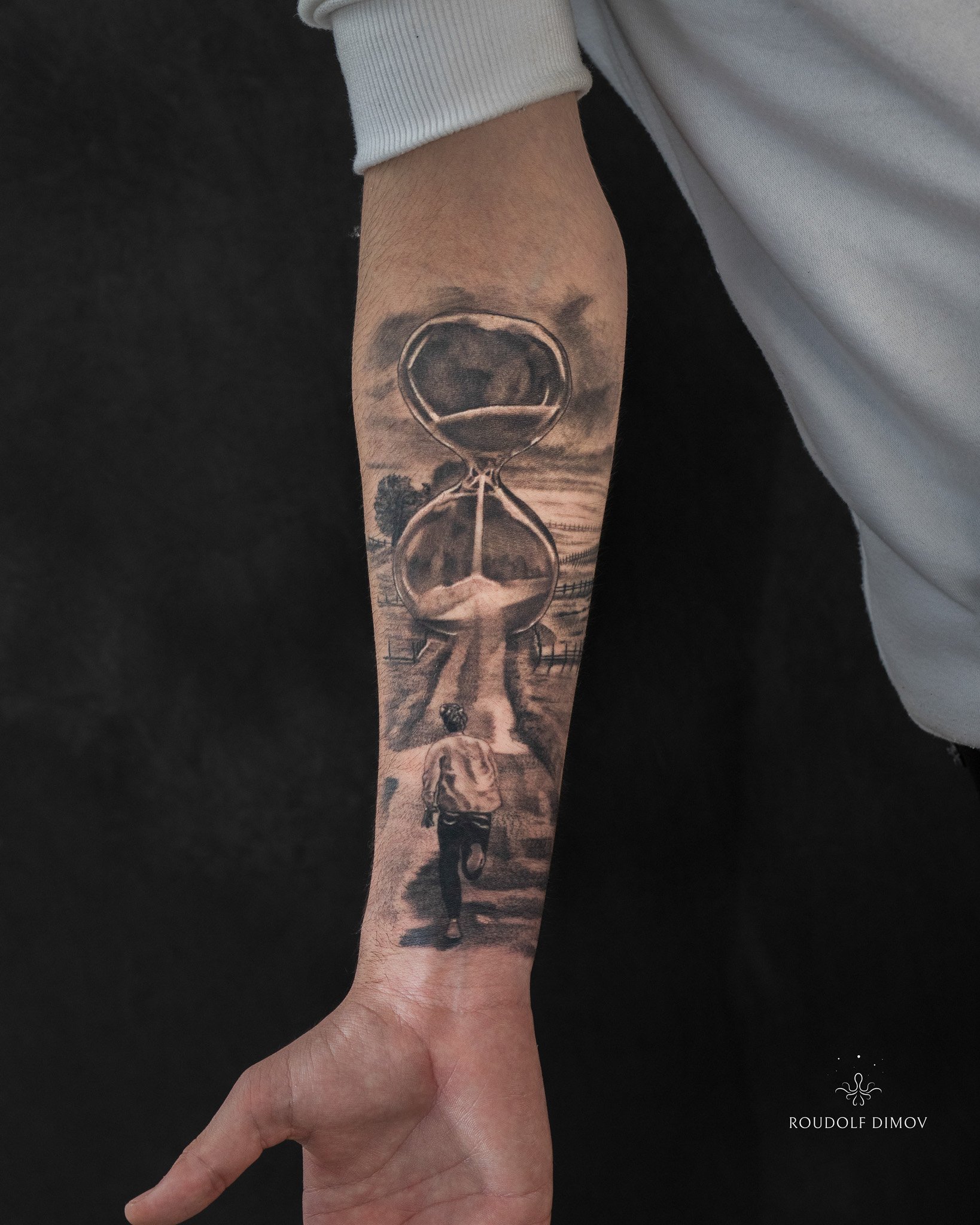
1. “Time” — The Tattoo That Opened the Door
This piece is the reason this series starts here.
I still remember the consultation: the ideas, the energy, the trust. The client didn’t bring a reference—only a concept. That was new for me. Until then, most people came with ready-made picture collages for me to reconstruct.
This time, I had to listen, think, translate, and build something from scratch.
It was also one of the first tattoos where I experimented with stippling (dot work) inside a realistic composition. I didn’t know whether it would work or fall apart. But the moment I saw it healed, something changed internally. I realised my career was taking shape—I was no longer just tattooing, I was designing.
That tattoo also created a chain reaction: a few weeks later I tattooed his brother, and more people started trusting my vision. It was a small turning point with a big impact.
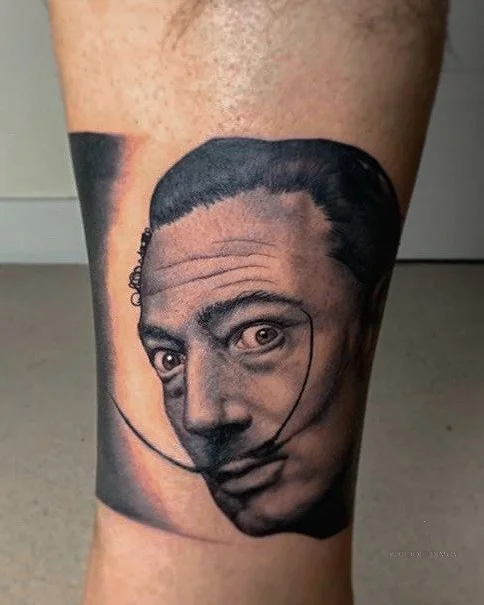
2. Salvador Dalí — A Test of Skill and Imposter Syndrome
I’ve always had a soft spot for surrealism. In university I wrote essays about Dalí, the subconscious mind, the absurdity of dreams—the whole surrealist universe. But the truth is: until this point, I had never tattooed a portrait I personally cared about.
Not a memorial portrait.
Not a reference someone asked me to do.
A portrait I admired.
That made the pressure different. I couldn’t hide behind excuses—“the reference was low quality,” “the client wanted it this way,” etc. If I didn’t execute it well, it was completely on me.
Dalí became the test:
Can I tattoo a clean, expressive portrait without background distractions, props, or extra elements?
That tattoo was a milestone because it forced me to trust my skills. It was the moment I stopped asking myself “Am I ready?” and started saying “I can do this.”
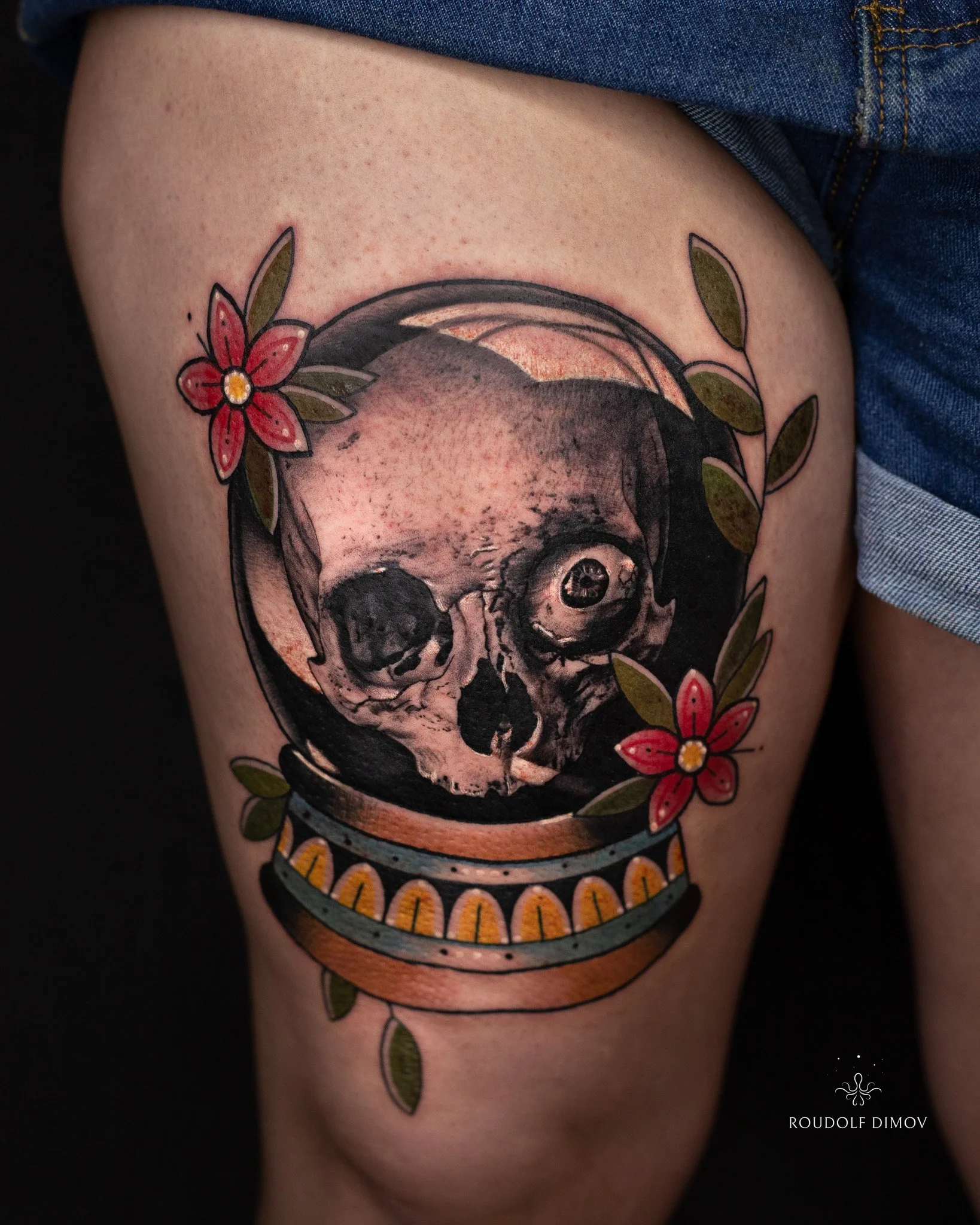
3. The Collaboration — Two Styles, One Idea
Back in the studio where I worked at the time, each artist had a completely different style. One of them, Nicole, specialised in traditional tattoos—bold lines, simple palettes, solid colours. Our styles couldn’t be further apart, but we always respected each other’s work.
One day she said,
“Let’s mix the two worlds. Let’s do a collaboration piece.”
Her idea: a crystal ball, something that looks toward the future.
My addition: a skull with one eye intact—symbolising the idea that the future is uncertain, death is inevitable, and time watches all of us.
The flowers around it were a small touch added at the end, but they brought the whole piece together.
That tattoo wasn’t just a fun moment—it showed me how two completely different visual languages can merge into something unique. It reminded me not to get stuck in one category or box.
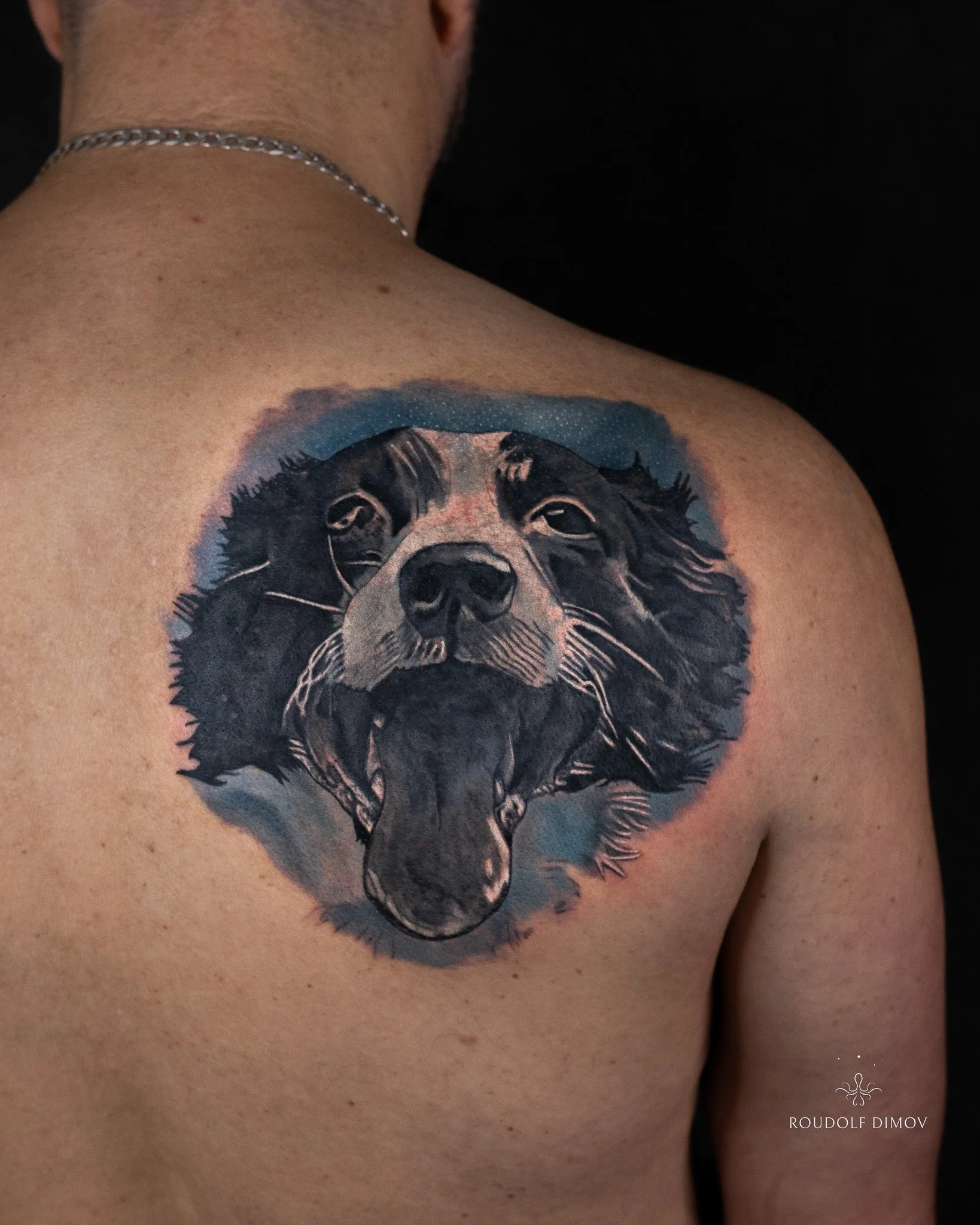
4. Memorial Dog Portrait (Cover Up) — Facing Fear Head-On
I won’t lie—this tattoo made me uncomfortable at first.
Not the client, not the idea, but the cover-up aspect.
Cover-ups are unforgiving.
You can’t hide behind softness, negative space, or subtle transitions.
You have to make the old tattoo disappear while still creating something beautiful and realistic.
This piece was a turning point because it forced me into new territory. I used muted blues to reinforce shadows and cover the previous tattoo. I pushed my realism further and learned how different tones behave during healing.
Most importantly, it taught me something about myself:
If I only stayed in my comfort zone, I would never grow.
Looking back, this tattoo represents a leap of faith—both from me and from the client.
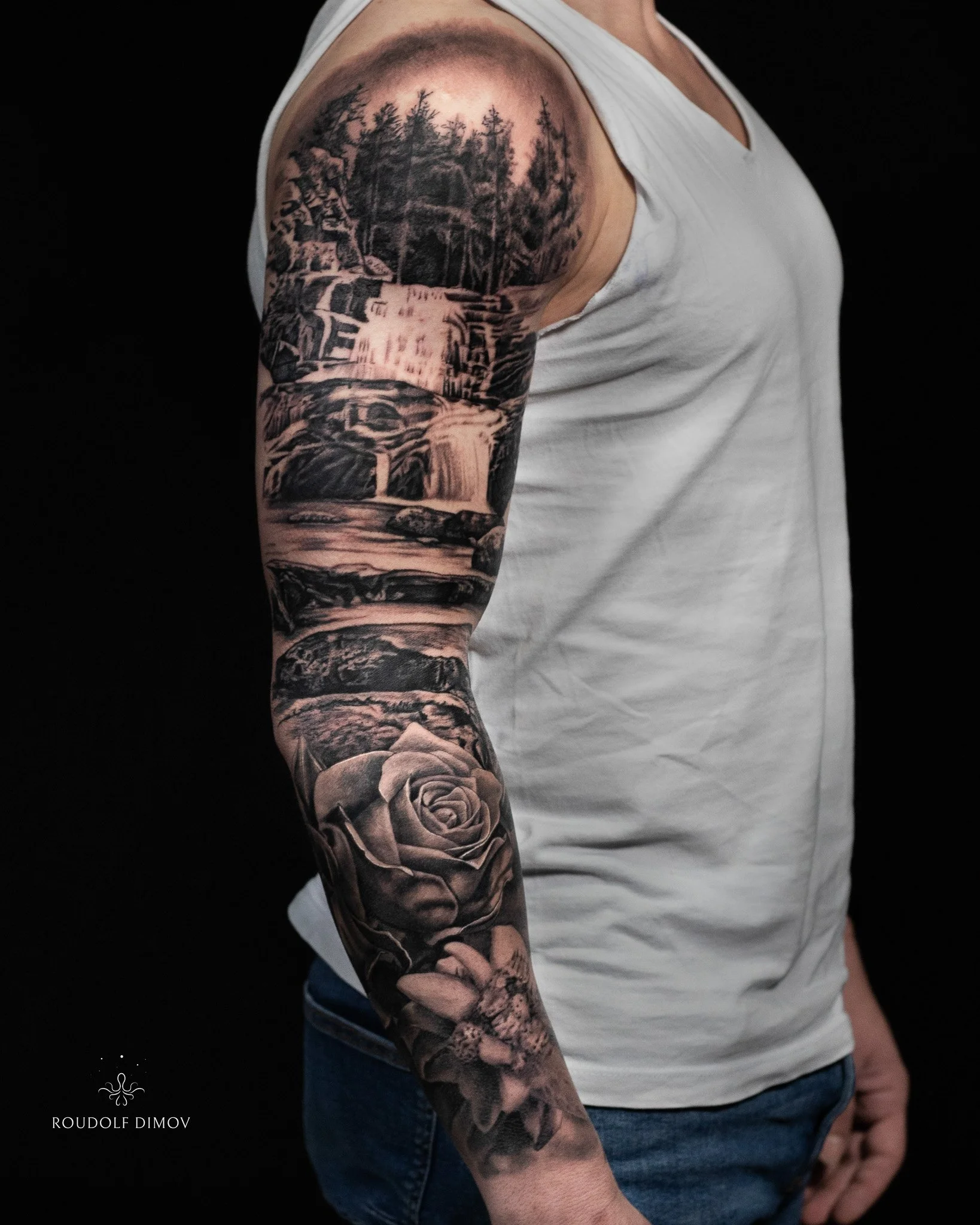
5. The Bulgaria-Themed Sleeve — Rediscovering My Roots
This tattoo was a surprise from the start.
The client wanted something that represented Bulgaria. I’m originally from Bulgaria, but since I was raised in Greece, I didn’t know as much about Bulgarian symbolism as I should have.
So this sleeve became a chance to learn about my heritage while creating something meaningful.
We included two flowers:
• The Bulgarian Rose (Rosa Damascena)
Known as the Damascus Rose, it’s one of the most famous symbols of Bulgaria.
It has a richer shape and more layered petals than a traditional rose.
Bulgaria is one of the world’s biggest producers of rose oil, and this flower carries a history tied to beauty, resilience, and tradition.
• Edelweiss
A mountain flower found in the Balkans, known for growing in high, harsh conditions.
It symbolises strength, bravery, and devotion.
Many people never see it in real life—it’s rare and hidden in high altitudes.
The waterfalls added depth and motion to the sleeve, giving the composition a feeling of calm power.
This piece wasn’t just a tattoo—it was a personal journey.
I learned about my own country while helping someone else honour theirs.
Final Thoughts
2022 was a year of growth.
A year of experimentation, risk, new confidence, and deeper artistic identity.
Looking at these tattoos now, I see versions of myself—older versions—but important ones.
Without these pieces, I wouldn’t be the artist I am today.
And this is only the beginning.
Next year, we move on to 2023.
FAQs – Tattoo Milestones & Artistic Growth (2022 Edition)
1. Why do certain tattoos become milestones?
Because they challenge the artist, push skill forward, or mark a shift in confidence or direction. They become personal turning points, not just portfolio pieces.
2. Why is client trust so important?
Trust allows the artist to design freely rather than copy references. Some of the most meaningful tattoos start with an open conversation, not a prepared collage.
3. How do collaboration tattoos work?
Each artist brings their own visual language. When done intentionally, contrasting styles can create something unique and unexpected.
4. Why are cover-ups more difficult?
They demand precise planning and strong technical control. The artist must hide the old tattoo while still producing a clean, believable new piece.
5. How do you approach culturally themed tattoos?
By researching the symbols and understanding their meaning. Authenticity matters, especially when working with heritage-based themes.
6. Do these milestone tattoos still influence you today?
Yes. Every one of them taught a lesson that continues to shape how I design, plan, and tattoo today.
🔎 Explore More FAQs:
https://www.roudolfdimovart.com/faqs
👉 Large Projects:
www.roudolfdimovart.com/large-projects
👉 Book a Consultation:
https://www.roudolfdimovart.com/booking
📍 London
✉️ info@roudolfdimovart.com
“Bring your story — I’ll bring it to life.”