
Healed vs. Fresh Tattoos – What to Expect During the Healing ProcessBy Roudolf Dimov
Introduction — The Difference Most People Never See
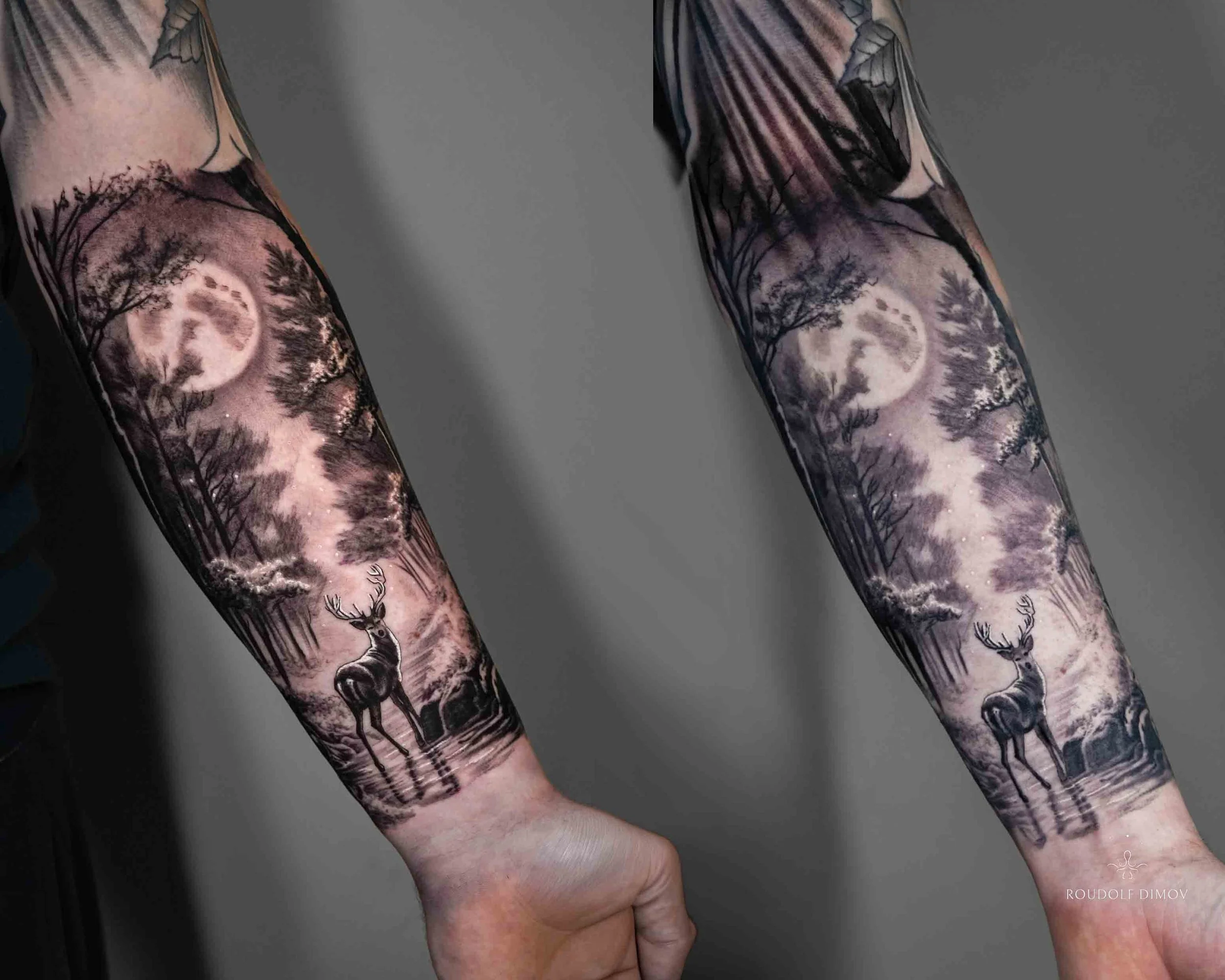
When people look at tattoos online, they usually see one of two things:
Fresh tattoos that look sharp, dark, glossy
Healed tattoos that look softer, smoother, more natural
Most don’t realise these stages are supposed to look different.
A tattoo is not finished the moment you leave the studio.
A fresh tattoo is an open wound.
A healed tattoo is the real final result.
In this post, I’ll explain what’s happening on the surface — and under the skin — so you know exactly what to expect and why healed photos matter so much, especially for black & grey realism.
Fresh Tattoos — What You Really See on Day One
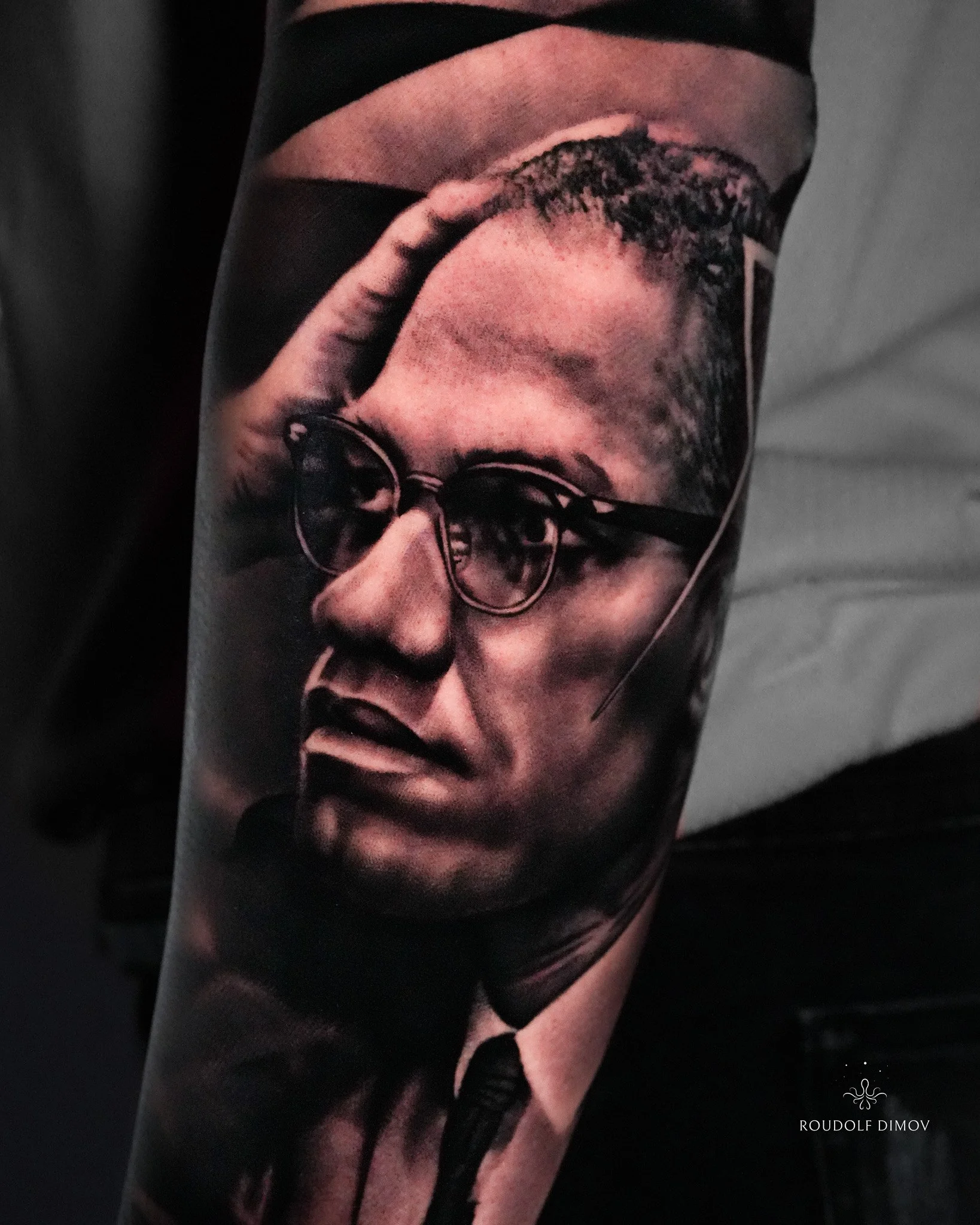
Fresh tattoos always look dramatic:
Deep blacks
Crisp edges
Redness and swelling
A glossy shine from plasma + ointment
This happens because the ink is still sitting close to the surface and the skin is inflamed. A fresh tattoo is like the first draft — bold, beautiful, but temporary in appearance.
Why Fresh Tattoos Look Darker
Fresh tattoos appear darker because:
The skin is swollen
Plasma adds shine
Blacks haven’t softened yet
Highlights look stronger than they’ll look healed
Ink hasn’t settled into the dermis
Fresh tattoos photograph beautifully — but this is not their final form.
Fresh vs. Healed — Why They Don’t Look the Same
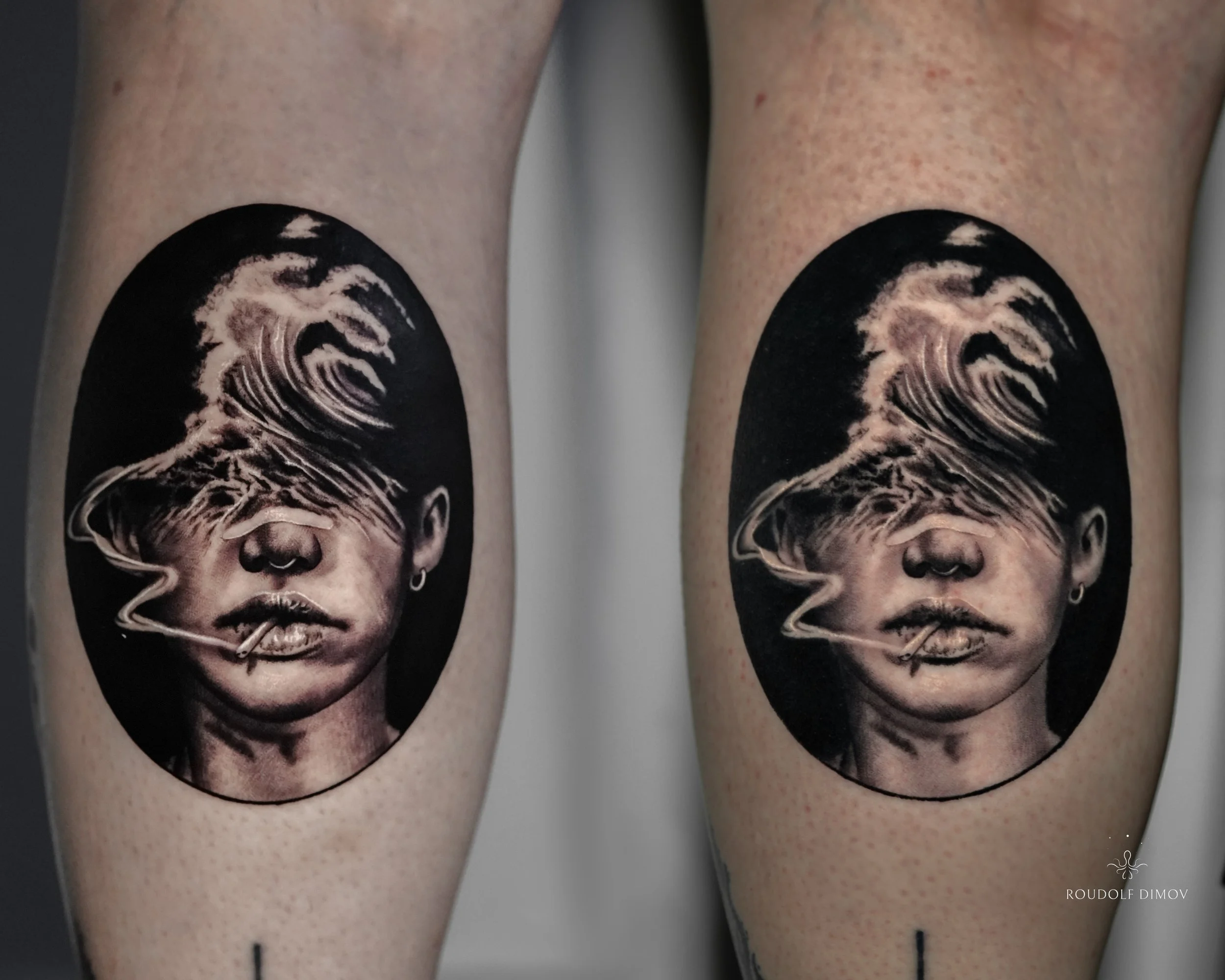
Right after the session, tattoos are:
Irritated
Glossy
Over-contrasted
Slightly swollen
During healing, your body settles everything:
Swelling goes down
A new skin layer forms
Some excess ink naturally sheds
Contrast reduces by around 15–20%
This is completely normal.
If a healed tattoo looks weak or patchy, that’s usually a sign of poor technique or overworked skin — not your fault.
And this is exactly why healed photos matter more than fresh.
The Healing Phase — What’s Really Happening Under the Skin
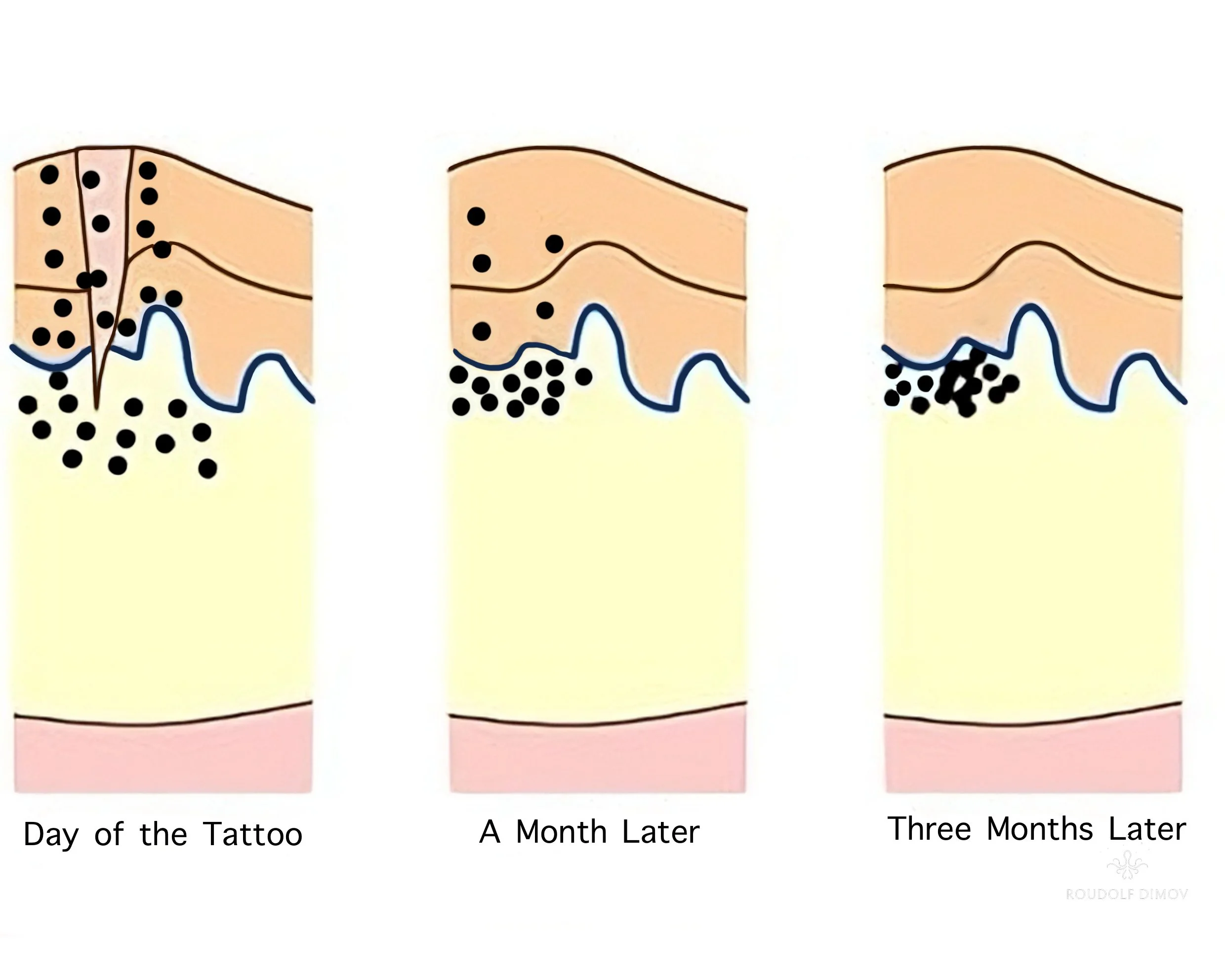
Healing happens in stages:
Days 1–3 — Plasma & Swelling
Shiny, wet appearance
Warm to the touch
Darker than expected
Some leaking of plasma + ink
This is normal — your body is reacting to the wound.
Days 4–7 — The Itchy Phase
Light peeling
Patchiness
Flaking like a sunburn
Mild itching
This is your body creating new skin. Nothing is “falling off.”
Days 7–14 — The Dull Phase
Most people panic here.
You’ll see:
Grey or dusty tones
Low contrast
A milky “fog” over the tattoo
This is the silver skin phase — a thin healing layer.
It always disappears.
Weeks 3–4 — Clarity Returns
Your skin smooths out and tones settle:
The tattoo softens
Contrast balances
Details become visible again
This is when you finally see the true healed result.
3–6 Months — Deep Healing
Internally, the dermis keeps repairing.
This is when black & grey realism usually looks its best.
Healed Tattoos — The True Final Result
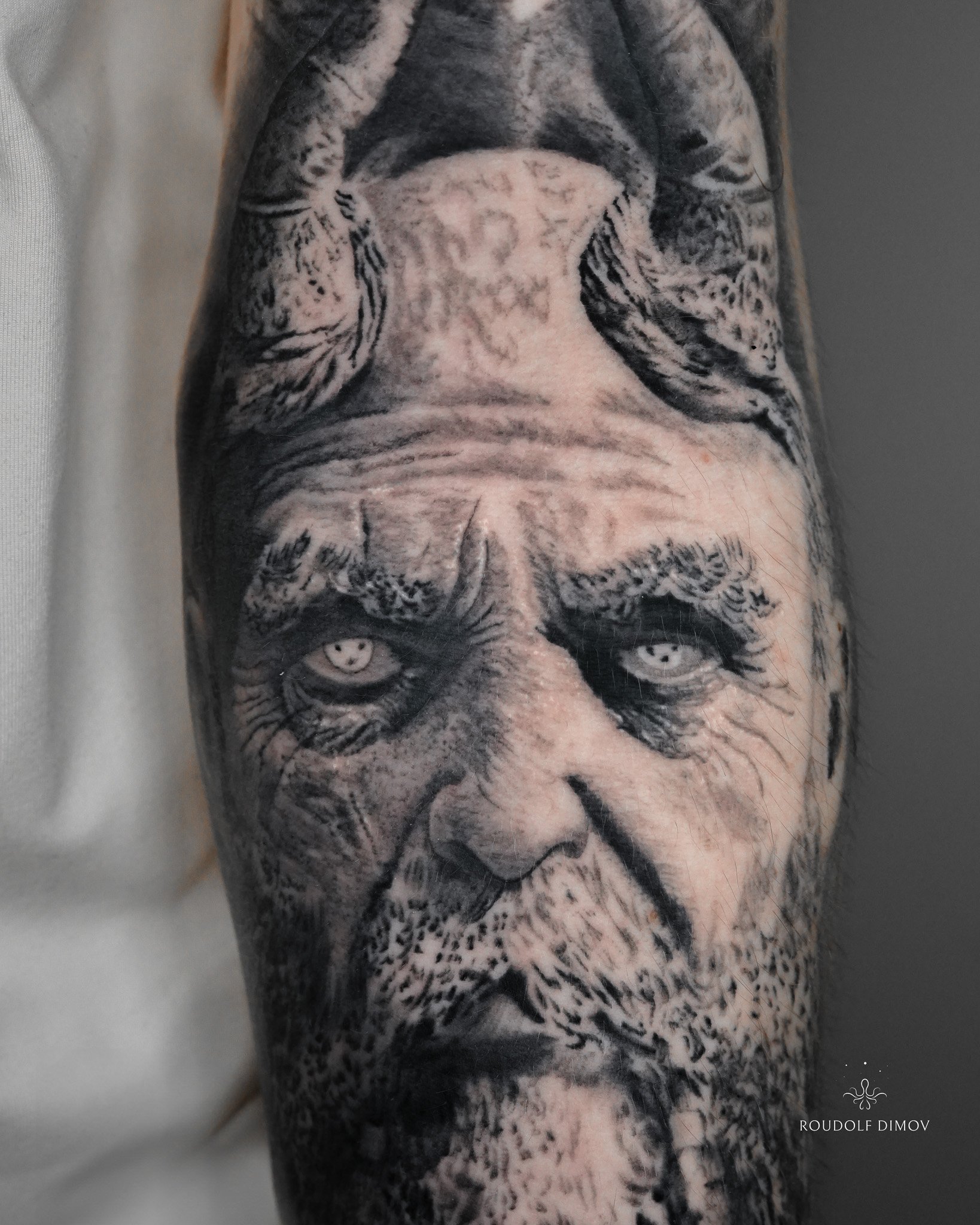
A healed tattoo shows the truth:
Proper depth
Clean gradients
Strong structure
Balanced contrast
Smooth transitions
Healed realism should look soft, natural, and readable in all lighting.
This is why I always show healed photos — fresh work can hide weaknesses, healed work cannot.
Why Fresh Tattoos Should Look Slightly Darker
I intentionally make fresh tattoos a touch darker because:
Healing softens everything by 20–30%
The new skin layer acts like a natural filter
Mid-tones lighten
Highlights fade slightly
This ensures the tattoo looks balanced when healed, not just on day one.
Realism lives or dies by contrast — too light early on means it won’t age well.
A Simple Look Under the Skin — Where Ink Actually Sits
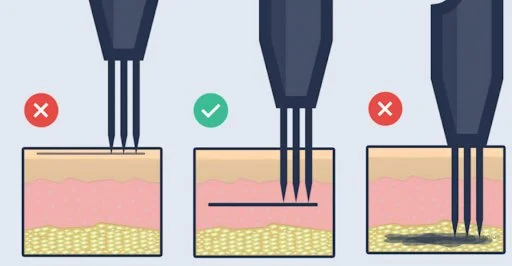
Your skin has three main layers:
Epidermis — the surface layer that flakes and peels
Dermis — where tattoo ink lives (1–2 mm deep)
Hypodermis — fat and connective tissue
Too shallow → tattoo fades
Too deep → blowouts, scarring
When the needle enters your skin:
It deposits ink into the dermis
White blood cells (macrophages) absorb and “hold” pigment
Some ink is carried away naturally
The rest becomes trapped in tissue
This is why healed tattoos lose a little vibrancy — your body clears what it can, and keeps the rest.
Why Tattoos Lose 15–20% Vibrancy After Healing
This softening happens because:
Surface pigment sheds during peeling
A new skin layer forms on top
The immune system removes tiny pigment particles
Swelling goes down, reducing contrast
This is normal, healthy, and expected.
White Highlights — Effective or Misleading?
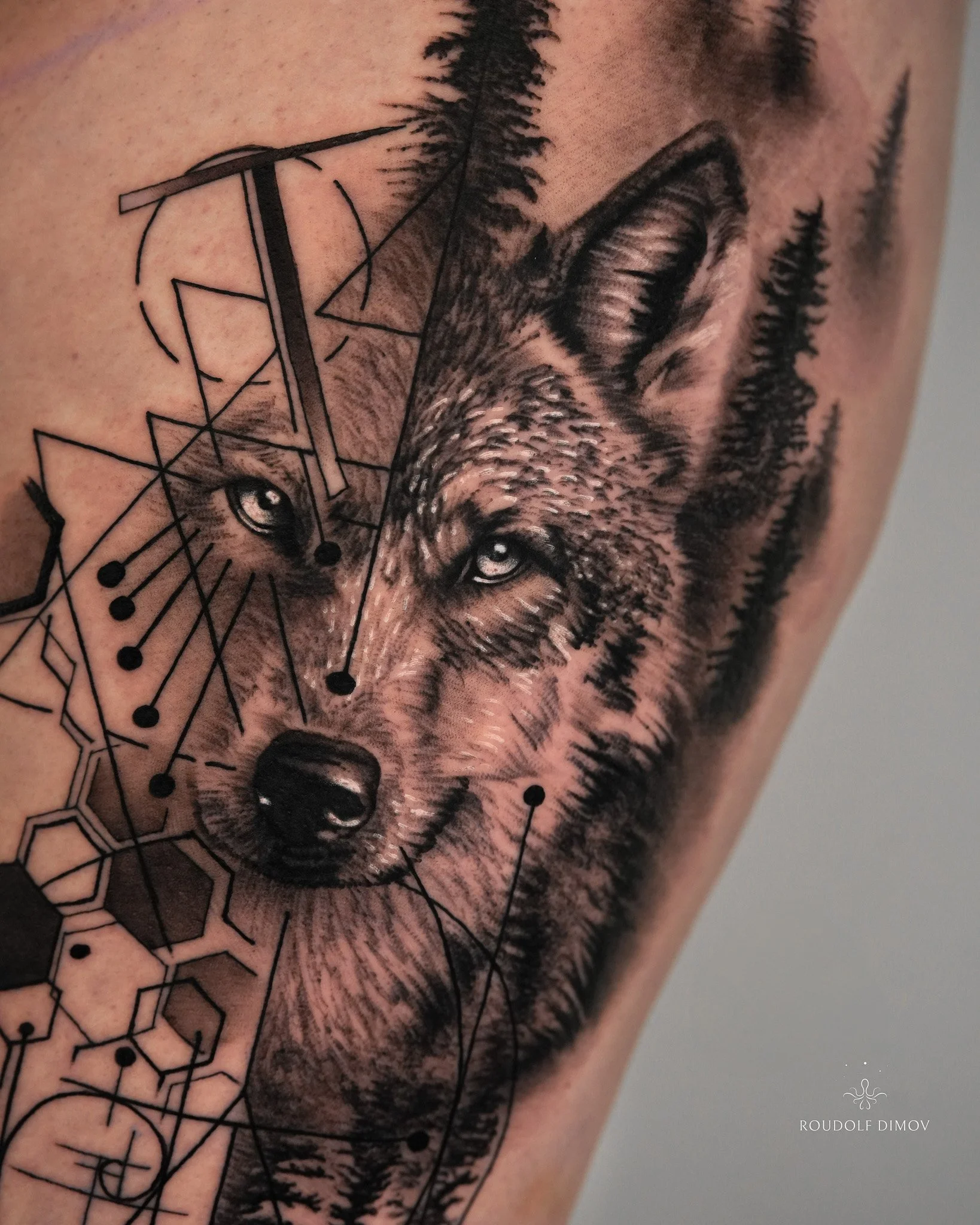
Fresh white looks incredibly bright because the skin is irritated.
Healed white blends naturally and softens.
Some artists use white to “fake” contrast for Instagram.
Once healed, the tattoo collapses.
I use white carefully and intentionally — as a tool, not a trick.
A healed tattoo should stand on its own.
Why You Should Focus on Healed Tattoos
You’re not investing in how your tattoo looks for one day.
You’re investing in how it looks in:
3 months
3 years
10+ years
Healed tattoos show:
Real contrast
Real saturation
Real technique
Real longevity
Fresh photos are exciting.
Healed photos are honest.
How I Design Tattoos With Healing in Mind
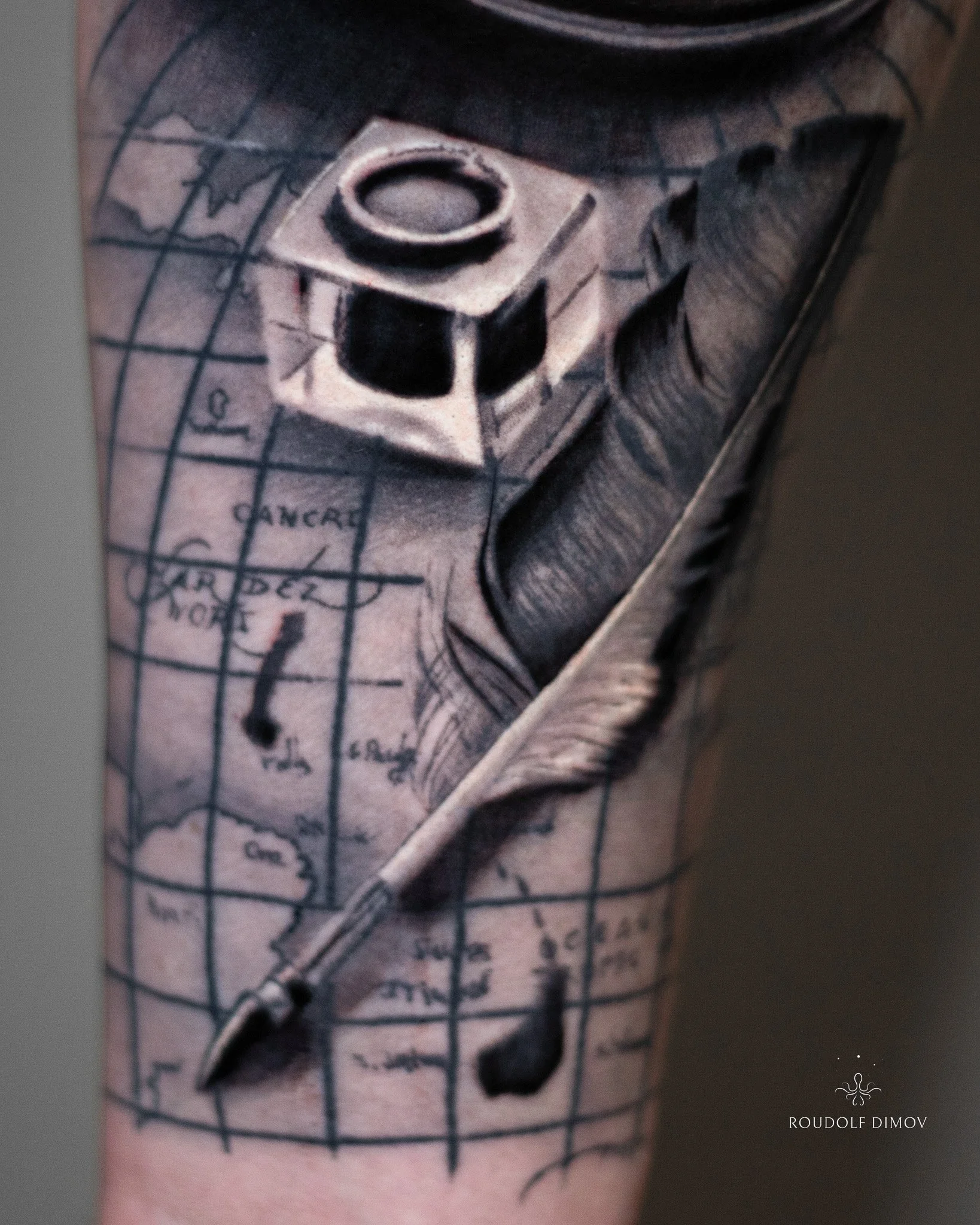
Every decision I make is based on the healed result:
Deep, clean blacks
Clear focal points
Smooth gradients
Minimal overworking
Controlled highlights
Respecting your skin’s limits
My goal is simple:
Your tattoo should look powerful today — and even better years from now.
How You Can Help Your Tattoo Heal Well
Your aftercare is as important as my technique.
Keep it simple:
Wash gently with unscented soap
Moisturise lightly — never overdo it
Don’t scratch or pick
Avoid sweat, friction, swimming, saunas
Keep it out of direct sun
After healing, always use SPF
Healthy skin = healthy healed tattoo.
Factors That Affect Healed Results
1. Skin Tone
Light skin = soft detail + fine gradients
Deeper skin tones = bold shapes + strong contrast
I design tattoos for your skin, not against it.
2. Placement
Areas that fade faster:
Knees
Elbows
Fingers
Feet
Best areas for realism:
Forearms
Upper arms
Calves
Thighs
3. Aftercare Habits
Over-care and under-care can both harm a tattoo.
Gentle, consistent care is best.
4. Long-Term Care
Your tattoo will last decades longer if you:
Use SPF
Stay hydrated
Avoid tanning or burning
The sun is the biggest enemy of tattoos.
Why I Show Both Fresh & Healed Photos
Fresh is exciting.
Healed is the truth.
You deserve to see both — how the tattoo was made, and how it matured.
My goal is to create work that looks incredible today, and even better in 10 years.
When to Book a Touch-Up
Most tattoos heal perfectly.
You may need a touch-up if:
Your skin rejected ink
A scab was picked
You have friction-heavy areas
Your skin scars easily
The piece is very detailed
Touch-ups are small, targeted, and quick.
Final Thoughts — Choose Artists by Healed Work, Not Fresh Photos
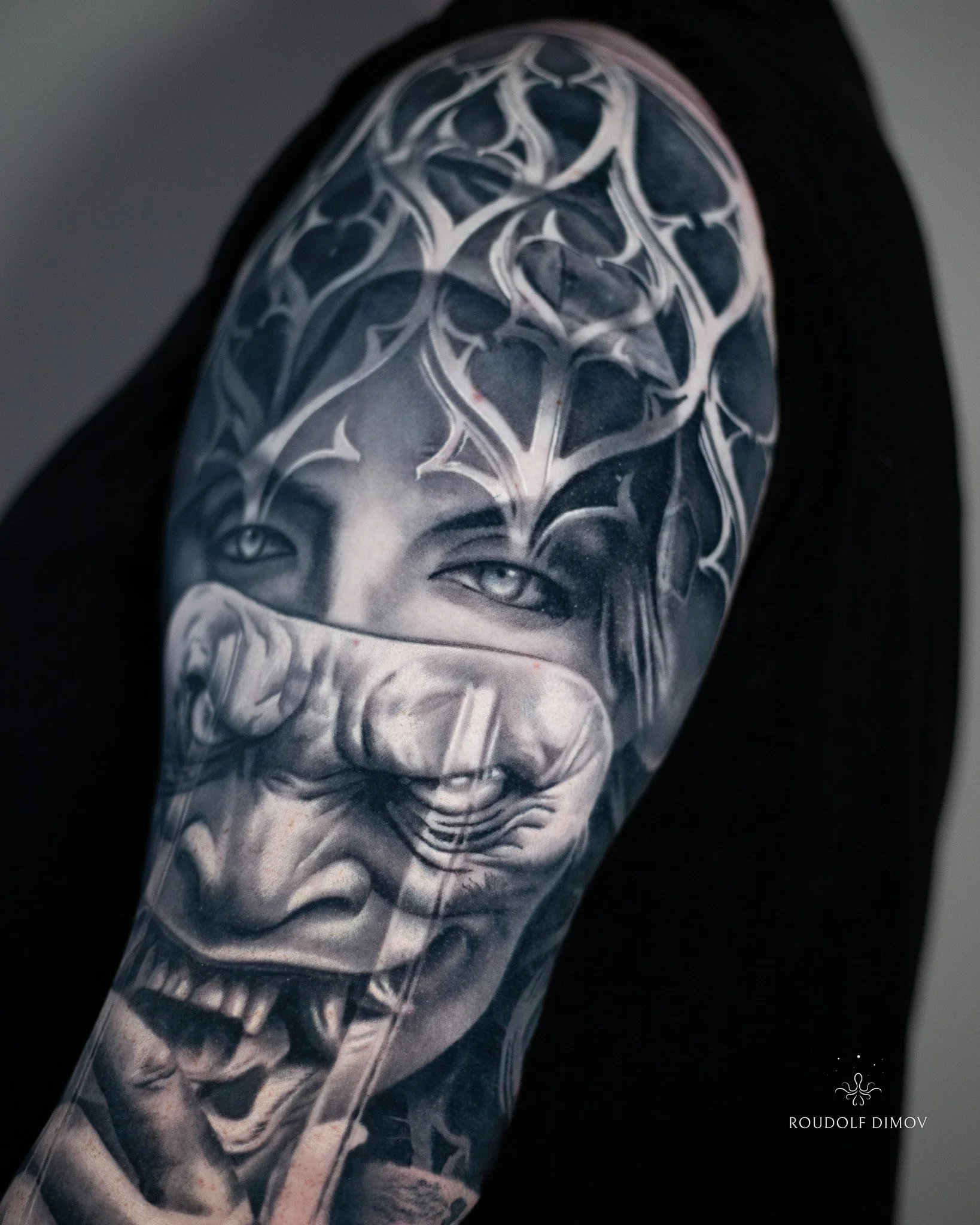
Fresh tattoos are the loud trailer.
Healed tattoos are the full film.
If you’re planning a large-scale realism piece — sleeve, leg, back, portrait, mythology — choose an artist who cares about the healed result, not just the photo taken at the end of the session.
If you want to compare my healed and fresh work, you can explore my Healed Tattoos Gallery.
A tattoo is a collaboration between:
The artist
The technique
The design
Your skin
Fresh tattoos show the craft.
Healed tattoos show the longevity.
If you want a tattoo that ages beautifully, I’ll guide you through every step.
👉 Large Projects:
www.roudolfdimovart.com/large-projects
Bring your story. I’ll shape it into art.
👉 Book a Consultation:
https://www.roudolfdimovart.com/booking
📍 London
✉️ info@roudolfdimovart.com
Bring your story. I’ll shape it into art that lasts.
FAQs — Fresh vs. Healed Tattoos
How long does a tattoo take to heal?
Surface healing: 10–14 days
Deep internal healing: 3–6 months
Why does my tattoo look dull during week two?
That’s the “silver skin” phase — totally normal.
Why do healed tattoos look lighter?
A new layer of skin softens and filters the ink.
Why does white ink fade so much?
White sits shallow and softens naturally as it heals.
Do I need to use a lot of cream?
No. Light moisturising is best. Overuse causes issues.
When should I book a touch-up?
After 2–3 months if you see patchy areas or ink loss.
🔎 Explore More FAQs:
https://www.roudolfdimovart.com/faq